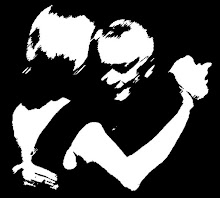
Ladies, we may sometimes lament the gender imbalance at milongas. Perhaps we dance less than we’d like. But have you considered some of the advantages of our role in tango?
After Marta’s milonga Wednesday night (El Rodríguez), I was reminded how lucky we can be … if we are patient. During that milonga I experienced three truly memorable tandas with men I had never previously danced with. And each one was so very different!
D took me on a whirling flight through energetic D’Arienzo valses. His strong dissociation and control meant our turns were so tight, we were like the vortex of a tornado. Yet our movement was contained and couples around us remained undisturbed.
I caught the eye of S when I heard the introduction of a romantic Di Sarli tango. His response to the music felt like waves in the ocean. Carrying us gently, suspending at the crest of the wave and then accelerating downwards.
Troilo’s tangos get a lot of coverage here, I’m happy to say. I noticed a man trying to invite me when a Troilo tanda started. Not having seen him dance, I looked away. Fortunately, two lovely local ladies at my table, quickly reassured me that I should definitely not pass up that offer. C took me on a nuanced musical journey, taking time to savour moments in the music and attentively responding to my responses.
To be ready for such diverse, special experiences in the milonga, good technique/body control is needed, allowing me to respond to a variety of movement possibilities. The woman’s role also requires her to simultaneously follow the music … as well as her partner’s interpretation of it. She doesn’t “just follow the lead”.

Finally, mindset is critical. If I had had a preconceived idea of the dance, eg. dancing certain figures; being determined to display decorations; etc., then I would have missed out on the magic. Being flexible and open to my partner is pivotal. That’s when it gets interesting. As in life!
Pat